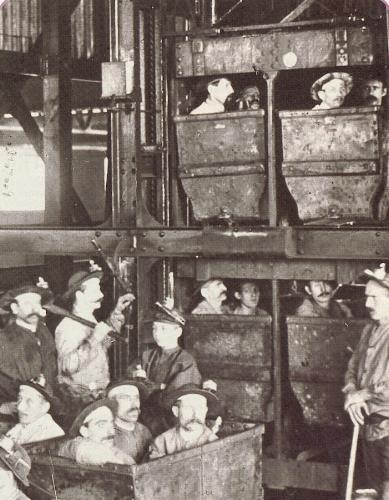
I read "Germinal" what now feels like eons ago (in April). And it is probably the most difficult book to write down thoughts about since I started blogging in the beginning of this year.
When I think about "Germinal", I get this huge back-flow of emotions and feels that I went through while reading. Yet, those few times I have attempted to write about it, it's like having a blogger's block (there is such a thing, right?). So I began wondering if it is one of the books I find difficult to talk about because there was too much in it. And if I am afraid that talking about it and transforming the thoughts into words is going to somehow diminish the impact.
Generally, I am inclined towards depressive and difficult, and this book is The One. It's The Book, if you are searching for all the pains and sufferings and misery that human beings can be tossed into and have to struggle through.
The mining industry has always generated a lot of spook in me. Earth is our home, but it can also be treacherous for those who challenge it. Somehow, the thought of sending people down to hundreds and hundres of metres, into the belly of the earth, feels so unnatural. One wrong move, and one can end life there. In this book, mines are characters - in Zola's world, they are breathing and they are alive.
More miners arrived, fresh groups of stonemen, and one by one they were swallowed up by the pit. It was the three o'clock shift, another meal for the mine, as the teams went down to take over the concessions that the hewers had been working on, at the far end of the tunnels. The mine never slept; night and day these human insects burrowed into the rock, 600 metres below the beetfields. /p. 65/
 |
| Illustration from here. |
More than once Zola portrays mines as creatures with huge bellies who "swallow" the miners. It is spooky. Although most of the activities take place up on the solid ground, there are a few occasions where reader is taken down, to go into the mine with characters, to take a peek at their cruel labour, just as the reader is taken down with the miners who get trapped below. There is nowhere else to look - and even if I wanted, I could not; Zola is just so convincing.
I don't want to write about narrative; I feel that in books like that, it is secondary. I feel like the narrative (and I'm not saying it's not good!) is there to serve another purpose, a greater one - to show corners and nooks deep inside people, to show how animals inside us come out when certain circumstances are triggered. The characters are put into the positions where they do not have many choices, or they have choice between the bad and the worse. And that is how Zola strips the human nature - from all the clothes, bells and whistles, to the naked, puny things that we are - some with good heart, some with bad heart, but everyone with the same instincts - to prevail, to survive, to reproduce. They survive the hunger and the cold, and they bring countless amount of new souls to this hunger and cold, all for what?
"The worst of it, I think, is when you realize that nothing can change... When you're young you think that you're going to be happy later on, there are things you look forward to; and then you keep finding you're as hard up as ever, you stay bogged down in poverty... I don't blame anyone for it, but there are times when I feel sick at the injustice of it all." /p. 166/
And even though at time there seems to be no obvious ending for this viscious circle (all the households simply wait for children to get old enough to go to the pits so that they can help out with money...), Zola ends the novel in a more hopeful note - the hope that there will be better days.
I think it is such books that we all need to read, from time to time, to look back at our #FirstWorldProblems, and to get better perspective on ... life in general. (My #FirstWorldProblem at hand - there seems to be no decent cover image for the copy of the novel I read in the webbed world. It seemed tragic for a moment, but then I thought about the Maheudes and ... yeah, seriously. Get a grip, girl.)
I want more Zola in my life.
---
524 pages
---
I read this novel during the Zoladdiction month organised by o and Fanda. Thank you so much for organising this event, girls!