Showing posts with label classics club. Show all posts

Friday, October 25, 2013

C_Club #10: The Illustrated Man by Ray Bradbury

Short story is definitely not my preferred format when reading, except when it comes to Ray Bradbury. The Martian Chronicles is one of my all-time favourite books, ever, and I was happy to discover that The Illustrated Man gives out some very similar vibes.
 
I didn't even know I was going to read this book this month until I discovered it for a ridiculous price from a bookshop, brought home, figured "I'll take a little peek" ... and then it was over. Only then did I realise that it is a good RIP VIII read and also, what do you say, I had even added it to my Classics Club list and completely forgotten. So that's pretty much a double or triple win.
 
The whole concept of this story book is quite spooky - the stories are tattooed on the illustrated man's skin and they come to life at night. They are all considerably short, which makes it a good book to read before bed (no need to wait for those endless new chapter pages).
 
Let me just say that I love how Ray Bradbury writes. In addition to such beautiful and at the same time simple prose (at least in this book - it is different when you read Something Wicked This Way Comes), he has such sympathetic attitude towards his characters. I have often imagined him as this gentle father figure, for whom characters are like children - yes, they can be loud, throw tantrums and spill the food, but they are still to be loved and understood.
 
Other than that, I appreciate the kind of subtle fantastic setting. It can oftentimes be just one detail, only one thing that is a bit different than your and my real life, but it has such impact (for example, many of the stories take place on a different planet - usually Mars but in this book also Venus; in one of the stories there is a house that is "alive"; a little bit of time travel). Whatever the setting or time, the stories tackle deeply humane and moral issues and relationships between people, from racism to bullying to parenthood.
 
My favourite stories:
* The Veld (house that is alive);
* The Long Rain (set on Venus; *very* psychologically disturbing);
* Usher II (giving E.A. Poe some love - intelligent piece of fantasy-horror);
* The Last Night of the World (very short - "What would you do if you knew that this was the last night of the world?" - how wonderful is that opening sentence?);  
* The Fox and the Forest (time travel story of people who escape to the past);
 - I could actually go on and on, most stories I liked very much.
 
I don't usually like to recommend stuff to read, but in this case I am making an exception, because Bradbury's works are so accessible and yet intriguing, flirting with the philosophical side of life while being everything but boring and dull - yes, I would recommend his stories and novels wholeheartedly.

Saturday, August 24, 2013

C_Club #9: Mansfield Park by Jane Austen (Austen in August reading event)

After having finished my second Jane Austen novel, I am willing to take back all the prejudices that I used to have towards her and feel confident to say that I will intend to read all her bigger works - at first I only added two books to my Classics Club (CC) list and now I have read them both and can safely say I've not yet had enough of Jane Austen. It's no "chick lit of the past times", as I mistakenly thought. She was clearly a clever and eloquent woman.
 
I had heard of Mansfield Park as being the most boring and "meh" out of Austen's six biggest novels, and that was partly why this was the book I added to my CC list. I deliberately did not add the more popular ones, knowing that if I did like what I read from the two more controversial ones, I would get to the more popular ones anyway.
 
My guess is that the reasons why people are not that into Mansfield Park lie in characters and the pacing of the story. It is a slow roller, that is true, the romance is not that "in your face", and there are parts that can bore some people (for example, the whole fussing around with the play, which took several chapters). I personally am not disturbed by slower stories, maybe even quite the contrary.
 
When it comes to characters, and specifically the character of the female heroine Fanny, I actually liked her a lot more than I think I will like girls from Pride and Prejudice or Sense and Sensibility or Emma. I liked Fanny's quiet ways; she was almost invisible most of the time, but she had her values that she did not trade for anything. I think the mistake that is easy to make here is taking quieter personality for spinelessness. Fanny has a spine, and I would actually tip my hat to her (if I was wearing one) for what I think is her great survivability instinct. Here's what I mean: in the age of a child, Fanny was sent away from home, to live with relatives. Even if it was better for her, no-one asked whether she liked it or even, what she thought of it. In the family there were the children, and then there was Fanny, often an object of oppression and basically free workforce. I guess what I am trying to say is that Fanny never had the home field advantage, and in such situation, I think it's wiser to lay low and see how it goes, rather than show a lot of personality.
 
 
Illustrations from
http://www.mollands.net/etexts/mansfieldpark/mpillus.html
One can probably claim that Fanny is a bit boring in the sense that she is not noticeably strong heroine, but I disagree; Fanny, like many others, is a character similar to those we meet in life, and not everyone of us is always vastly unique, original, witty, snarky, et cetera. Life is full of different characters, some more outstanding than others, and although I certainly can value a very strong female character (think Marian Halcombe from The Woman in White), I am a bit disturbed by the fact that it is the characters with lots of extravagance that get most attention. I am a quiet, modest person myself, although with a lot of spine and stubborness ;), and I guess a part of me would like to think that in skilled writer's hands, a character like me would also form a (half) decent story.
 
In short, I did enjoy Mansfield Park, but partly because of low expectations to begin with; I am glad I am getting over my prejudices towards Austen, even though I know that she will never be my favourite author.
 
---


Here are few other reviews on Mansfield Park that I have recently read and liked:
 
* Thoughts: Mansfield Park by Jane Austen by Adam from Roof Beam Reader
* Mansfield Park by Jane Austen by Eszter from Anneish Imaginary Adventures
* Mansfield Park by Mary from bibliographic manifestations
* Mansfield Park by Jane Austen (Review) by Ekaterina from In My Book
* Mansfield Park by Jane Austen by Brona from Brona's Books
 
 
Austen in August is hosted by Adam at Roof Beam Reader.


Sunday, June 9, 2013

C_Club #8 - "The Blind Assassin" by Margaret Atwood

This is my third Atwood-novel; earlier I have read "Oryx and Crake" and "The Handmaid's Tale". "The Blind Assassin" won Man Booker Prize in 2000 and was shortlisted for the Orange Prize for Fiction (The Bailey's Women's Prize for Fiction as of next year) in 2001.
 
"The Blind Assassin" is a clever book. The story is told through a first person narrator, through a novel chapters and through newspaper cuts. I suppose this makes it an epistolary novel. And it is also a story within a story, so overall, a complicated story-telling technique, which should please people (such as myself) who enjoy cut-up and sown-back-together narratives and don't mind time- and focus-jumps.
 
The story starts most intriguingly: "Ten days after the war ended, my sister Laura drove a car off a bridge." The first person narrator is Iris Chase, and her younger sister Laura, who is described to commit suicide on the first page, is the author of the novel within the novel. The rest of the cast varies, though in general, we are dealing with mostly non-likable characters here. And as it has become quite common in literature, the house servants (in this case Renie and later her daughter) are those with the most sense in their brains and feet strongest on the ground.
 
Iris herself can be difficult to relate to. From the beginning she has this attitude of "Woe to me, the life takes over and there is nothing I can do about it". To an extent it is understandable, due to the situation of her family - mother is dead (no female role model there for her and her sister), father is struggling to keep up the family business, and Iris is expected to marry off wealthy in order to save the business, which she does, thinking that what else could she do in life anyway. Laura has a bit more encouraging attitude, she actually thinks it plausible that a woman could go and search for a job (which she does at one point), and she is generally much more vibrant, though also a lot more sensitive creature. Compared to Laura, Iris did come off rather phlegmatic most of the times.
 
It's difficult to write about the plot because there are twists and turns and surprises around the corner, but they are written masterfully and with a lot of elegance by Atwood. The story grows naturally page after page (for many it develops too slow, no doubt), and when something is revealed, it actually makes an impact on the reader. I was fascinated by the three channels of storytelling - the first person, the novel and the newspaper cuts. It kept me on toes all the time because I sensed that Iris herself is probably not the most reliable narrator, and the story within story also keeps you asking how much of it was fiction and how much was taken directly from the life events. So ironically, the newspaper exerpts, although neutral, cold and distance, can be the most reliable source of information here.
 
"The Blind Assassin" was very different from the other two novels by Atwood I have read (both of which were set in dystopian world) and I liked it a lot - the story was solid and I loved the writing. Margaret Atwood is definitely one of the most charming authors, language-wise, I have read. And will continue reading.
 
Why is honeymoon called that? Lune de miel, moon of honey - as if the moon itself is not a cold and airless and barren sphere of pockmarked rock, but soft, golden, luscious - a luminous candied plum, the yellow kind, melting in the mouth and sticky as desire, so achingly sweet it makes your teeth hurt. /p. 300/
 
Now I got a craving for yellow plums :)
 
---
521 pages

Thursday, May 30, 2013

C_Club #7 - "Something Wicked This Way Comes" by Ray Bradbury


This is a story about two boys, a creepy carnival, wicked characters and power of good, all set in spooky October. Welcome to the wonderfully horrible world of Ray Bradbury.
 
This novel is somewhat difficult for me to write about. It is quite different from other two Bradbury books I have read, one of the best classic dystopias "Fahrenheit 451" and short story collection "The Martian Chronicles". "Something Wicked..." is a lot faster, has a lot more energy and colours; it is an excellent example of a skillful author using "show, not tell" technique.
 
For such a short story, it has very wide cast of most extraordinary characters. Aside from Will and Jim, the two 13-year olds living in their quiet town, Will's father and their schoolteacher there are the members of the carnival - the Illustrated Man G. M. Dark (Bradbury has another short story collection also called "The Illustrated Man"), the Dust Witch, a lightning rod salesman that turns into a dwarf, a Skeleton, etc.
 
Picture from here.
For the tents were lemon like the sun, brass like wheat fields a few weeks ago. Flags and banners bright as blue-birds snapped above lion-colored canvas. From booths painted cotton-candy colors, fine Saturday smells of bacon and eggs, hot dogs and pancakes swam the wind. /p. 61/
 
It makes me wanna go there and have a carousel ride, but then again, it would not be such a good idea, because from the very beginning you realise that there is something really fishy about this particular carnival.
 
I really liked the language, although since things were not "painted red on the wood", as we say in Estonian for something that is overly simplified, at times it was a bit difficult to keep up with all the flow and craziness. But such fun.
 
The closest I would get to describe my reading experience would be an explosion of some colourful jelly-gummy-candies in my head. Or Skittles. I love Skittles. Or maybe liquorice, since it is, after all, a very spooky book.
 
This book also reminded me that I still have Erin Morgenstern's "The Night Circus" somewhere on the shelves, and that I should really read it. Should be somewhat of a similar setting.

Tuesday, May 14, 2013

Spinning Into Summer - the Classics Spin #2


Folks running The Classics Club thought it's a good idea to take out the top-hat again - and I wholeheartedly agree! Check more information on the Spin event from the web site.
 
During the last spin, I got to read "Arrowsmith" by Sinclair Lewis, which was a decent enough book tackling some really interesting moral dilemmas, which pretty much fit also into the nowadays' world.
 
This time I decided to add a random to the random - and I picked my 20 books with the help of Random.org. I then took the same categories I used last time to divide the books around. I added one book myself - "Moll Flanders" by Daniel Defoe, as there is 18th century literature event coming up in June.
 
Category 1: "Gimme Gimme Gimme!"
 
1. E. M. Forster "Howard's End"
2. Emilé Zola "Nana"
3. Michael Cunningham "The Hours" (Random.org chose that one even twice so I think it's only fair if it gets chosen :p)
4. Thomas Hardy "Jude the Obscure"
5. Arthur Conan Doyle - something from the Complete Sherlock collection (either a novella or a set of stories), since I refuse to read the whole Complete book at once.
6. Charlotte Brontë “Villette”
7. Daphne du Maurier "Rebecca"
 
Category 2: "Nooo! Have mercy!"
 
8. Charles Dickens "Bleak House"
9. Herman Melville "Moby Dick"
10. Ayn Rand "Atlas Shrugged"
11. Marcel Proust "Swann's Way"
12. Günter Grass "The Tin Drum"

Category 3: "Mh?"
 
13. Elizabeth Gaskell "The Life of Charlotte Brontë"
14. Ralph Ellison "Invisible Man"
15. Jerome K. Jerome "Three Men in a Boat"
16. John Irving "The World According to Garp"
17. Daniel Defoe "Moll Flanders"
 
Category 4: "Been there, done that..."
 
18. Toni Morrisson "Beloved"
19. Patrick Süskind "The Perfume"
20. Mark Twain "The Adventures of Tom Sawyer"
 
Random.org was really generous, picking proportionally the most books for "Gimme!" category (although "No Mercy!" could have maybe used fewer - those five books spook me out merely by looking at their titles). If anyone has encouraging words about books 8. - 12., I'd be very grateful to read them :)

And now to wait for the top-hat results :)

Thursday, May 9, 2013

C_Club #6 - "Germinal" by Emilé Zola

I read "Germinal" what now feels like eons ago (in April). And it is probably the most difficult book to write down thoughts about since I started blogging in the beginning of this year.
 
When I think about "Germinal", I get this huge back-flow of emotions and feels that I went through while reading. Yet, those few times I have attempted to write about it, it's like having a blogger's block (there is such a thing, right?). So I began wondering if it is one of the books I find difficult to talk about because there was too much in it. And if I am afraid that talking about it and transforming the thoughts into words is going to somehow diminish the impact.
 
Generally, I am inclined towards depressive and difficult, and this book is The One. It's The Book, if you are searching for all the pains and sufferings and misery that human beings can be tossed into and have to struggle through.
 
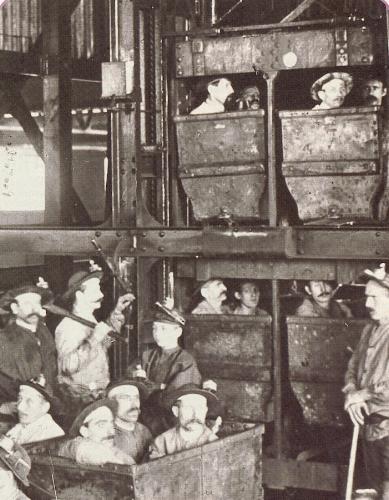
The mining industry has always generated a lot of spook in me. Earth is our home, but it can also be treacherous for those who challenge it. Somehow, the thought of sending people down to hundreds and hundres of metres, into the belly of the earth, feels so unnatural. One wrong move, and one can end life there. In this book, mines are characters - in Zola's world, they are breathing and they are alive.
 
More miners arrived, fresh groups of stonemen, and one by one they were swallowed up by the pit. It was the three o'clock shift, another meal for the mine, as the teams went down to take over the concessions that the hewers had been working on, at the far end of the tunnels. The mine never slept; night and day these human insects burrowed into the rock, 600 metres below the beetfields. /p. 65/
 
Illustration from here.
More than once Zola portrays mines as creatures with huge bellies who "swallow" the miners. It is spooky. Although most of the activities take place up on the solid ground, there are a few occasions where reader is taken down, to go into the mine with characters, to take a peek at their cruel labour, just as the reader is taken down with the miners who get trapped below. There is nowhere else to look - and even if I wanted, I could not; Zola is just so convincing.
 
I don't want to write about narrative; I feel that in books like that, it is secondary. I feel like the narrative (and I'm not saying it's not good!) is there to serve another purpose, a greater one - to show corners and nooks deep inside people, to show how animals inside us come out when certain circumstances are triggered. The characters are put into the positions where they do not have many choices, or they have choice between the bad and the worse. And that is how Zola strips the human nature - from all the clothes, bells and whistles, to the naked, puny things that we are - some with good heart, some with bad heart, but everyone with the same instincts - to prevail, to survive, to reproduce. They survive the hunger and the cold, and they bring countless amount of new souls to this hunger and cold, all for what?
 
"The worst of it, I think, is when you realize that nothing can change... When you're young you think that you're going to be happy later on, there are things you look forward to; and then you keep finding you're as hard up as ever, you stay bogged down in poverty... I don't blame anyone for it, but there are times when I feel sick at the injustice of it all." /p. 166/
 
Photo from here.
And even though at time there seems to be no obvious ending for this viscious circle (all the households simply wait for children to get old enough to go to the pits so that they can help out with money...), Zola ends the novel in a more hopeful note - the hope that there will be better days.
 
I think it is such books that we all need to read, from time to time, to look back at our #FirstWorldProblems, and to get better perspective on ... life in general. (My #FirstWorldProblem at hand - there seems to be no decent cover image for the copy of the novel I read in the webbed world. It seemed tragic for a moment, but then I thought about the Maheudes and ... yeah, seriously. Get a grip, girl.)
 
 I want more Zola in my life.
 
---
 
524 pages
 
---
 
I read this novel during the Zoladdiction month organised by o and Fanda. Thank you so much for organising this event, girls!


Friday, May 3, 2013

Classics Club May Meme

The Classics Club question of the month:
 
Tell us about the classic book(s) you’re reading this month. You can post about what you’re looking forward to reading in May, or post thoughts-in-progress on your current read(s).
 
My classics plans for May are
 
  • Margaret Atwood "The Blind Assassin" - this is a totally different Atwood-experience for me, since I have so far read only her dystopias ("The Handmaid's Tale" and "Oryx and Crake"). It is not a fast read and requires a lot of attention. There is very little dialogue in the novel. I am about half way through and taking my time with it, reading now and then. I love it that the story is set in Canada, such a different setting for me personally.
  • Charles Dickens "A Tale of Two Cities" - I started it, but then something else distracted me I think (damn you, Women's Prize!). But it's not your regular Dickens-brick, so there is no reason why I shouldn't pull myself together and finish it off in May. Also, Dickens' books have illustrations (insert a childish squeeek)!
  • Arthur Conan Doyle "The Hound of Baskervilles" - I joined a readalong for that, which will last for the whole month.
 
What will maybe distract me from the goal of classics are other books (I blame Sarah and Christine :D).
 
What will hopefully help me to reach my goal is a week-long readathon.
 

Sunday, March 31, 2013

C_Club #5 - "Arrowsmith" by Sinclair Lewis (Classics Spin)

The medical profession can have but one desire: to destroy the medical profession.
/p. 180/
 
I got to read "Arrowsmith" as a result of the Classics Spin event. The magical number 14 out of 20. It doesn't seem to be that widely read classics, so I hadn't seen any reviews, nor did I know much about Sinclair Lewis. And that was a good thing, as expectations can be a really, really bad thing more often than not.
 
From the back of the book:
 
Arrowsmith, the most widely read of Sinclair Lewis's novels, is the incisive portrait of a man passionately devoted to science. As a bright, curious boy in a small Midwestern town, Martin Arrowsmith spends his free time in old Doc Vickerson's office avidly devouring medical texts. Destined to become a physician and a researcher, he discovers that societal forces of ignorance, greed, and corruption can be as life-threatening as the plague.
 
Part satire, part morality tale, Lewis's Pulitzer Prize-winning novel illuminates the mystery and power of science while giving enduring life to a singular American hero's struggle for integrity and intellectual freedom in a small-minded world.
 
Boy, does Lewis have a sharp tongue pencil! There is a lot he dislikes, and he makes sure to put it out there. I was expecting some kind of a mad scientist tale, but it was not that. Martin is, to an extent, selfish, but he doesn't destroy lives. Quite the contrary. Sure, he is a very flawed character, but that only makes the story feel more realistic. And there is no "perfect" character in the book; all of them get slapped by Lewis more or less.
 
At first I did not like Martin Arrowsmith. He seemed to have no backspine. There were parts in the beginning where he seemed to be unable to make any decision when it came to choosing between two girls, so he ended up with an absolutely hilarious solution, summoning both girls to the lunch with him, admitting having been seeing them both and then decides to stay with the one who doesn't slap him or doesn't leave the table. It was a highly entertaining scene.
 
This story is timeless in the sense that the problems and dilemmas described in 1925 are pretty much the same in nowadays' world. When it comes to science - do you keep pursuing the Ultimate Medical Truth through the form of research, or do you sell out and work for people who want fast results, money and fame? Is acting like an everyday physician in a small settlement, curing people's pneumonias, broken legs and hypochondriac cases, really something that leads to new discoveries that mean something to humankind? Sure, we need doctors,  but if you have the talent and drive to spend sleepless nights and make a really big discovery that could change medicine for centuries to come, then such people maybe should focus on research instead.
 
The character that Lewis mocks the most is a doctor called Pickerbaugh. He is a man with political ambitions, and his daily work in the town consists mostly of mingling with the citizens, promoting health and sanitation through his VERY BAD verses, organising themed weeks such as a Write to Mother Week, an Eat More Corn Week, a Go to Church Week, Three Cigars a Day Week (?), Better the Babies Week, Banish the Booze Week, et cetera. Needless to say, Dr Pickerbaugh is highly popular among the townsfolk. Hilarious character but I'm not sure I'd want him to be my doctor.
 
One of the more tragic characters is Martin's wife Leora. We don't get to know much of her inside because although Martin needs her, he doesn't spend that much time at home or thinking about her and so the image the reader gets is that Leora has no life of her own, all she does is look after Martin's needs, sit with him hours and hours of nights in laboratories while he works, and never complains. She is an interesting character, although obviously criticised by Lewis for not having her own will and ways.
 
There are plenty more amusing and kind of over-the-top characters in the novel - I really enjoyed Lewis's take on the whole armada of different doctors, researchers, directors and families.
 
Lewis himself seemed to be an eccentric type as well. I already wrote here how he refused to accept the Pulitzer Prize, and that grew my respect for him; however, from the introduction of my "Arrowsmith" edition (written by Sally E. Parry) I read the following lines Lewis sent to his publisher Alfred Harcourt:
 
I hope they do award me the Pulitzer prize on Arrowsmith - but you know, don't you, that ever since the Main Street burglary, I have planned that if they ever did award it to me, I would refuse it, with a polite but firm letter which I shall let the press have, and which ought to make it impossible for any one ever to accept the novel prize (not the play or history prize) thereafter without acknowledging themselves as willing to sell out.
 
Arrogant much? :D Yea, that artsy folk sure can be eccentric.
 
I am totally happy I read this novel, I am pretty sure I will also read some of his other works like "Main Street" and "Babbit".

Saturday, March 30, 2013

C_Club #4 - "For Whom the Bell Tolls" by Ernest Hemingway (Modern March)

 
Well, I don't want to be a soldier, he thought. I know that. So that's out. I just want us to win this war.
/p. 352/
 
 
I remember thinking I'll choose that Hemingway for the Modern March event, because otherwise I wouldn't find motivation to read it. Thank you, Modern March! This was such a beautiful novel.
 
 
From the back of the book:
 
High in the pine forests of Spanish Sierra, a guerrilla band prepares to blow up a vital bridge. Robert Jordan, a young American volunteer, has been sent to handle the dynamiting. There, in the mountains, he finds the dangers and the intense comradeship of war. And there he discovers Maria, a young woman who had escaped from Franco's rebels...
 
The novel takes place in restricted settings in restricted period of time and with restricted cast of characters. Setting - the pine forests in Spain, period of time - about four days and character sheet includes about 10 repeating names. There are a few flashbacks, but luckily not too many to make reader struggle with immersion. And immersed I was. It felt like I could almost smell the forest and feel pine cones under my feet.
 
Hemingway's style has always been source of debates. I know many consider him boring, plain, maybe too macho. I have read "Farewell to Arms", which I liked, and "The Old Man and the Sea", which I didn't like, but that was because I had problems with the story itself, not the writing. This being my first Hemingway in English, I discovered that he is very much my cup of tea. No beating around the bush! No need to constantly say things that are obvious anyway! I guess his writing smells a bit like testosterone, but it suits me fine. There are two women in the novel - beforementioned Maria and Pilar, who gives out very strong matriarchal vibe. She can cook, plan tactics, be a diplomat as well as blow up enemies, when needed. So I have so far not many problems with how women are described in Hemingway world, either. Maria was a different cup of tea, but she was a war victim anyway and I will not even pretend to understand what that may feel like.
 
What I liked a lot about "For Whom the Bell Tolls" was how it became more and more poetic as the story went on. There were some really, really beatiful passages, which made me raise an eyebrow thinking about all the talk I had heard/read about plain writing. Let's take a little peek into the main character's head:
 
You have no family but a brother who goes to battle tomorrow and you own nothing but the wind and the sun and an empty belly. The wind is small, he thought, and there is no sun. You have four grenades in your pocket but they are only good to throw away. You have a carbine on your back but it is only good to give away bullets. [...] Everything you have is to give.
/p. 384/ 

One of the central topics of the book is the flow of time, or more precisely, how it can feel very different, depending on situation. In a war situation, you only live a day, or even an hour/a minute at a time, because every next moment may be your last. I think this kind of environment causes an interesting contradiction - on the one hand, it is easier to be completely apathetic and feel like there is no future and on the other hand, all the feelings and emotions you have are way enhanced. Based on that, I found the romance between Robert and Maria believable and beautiful, but there was always a thought back in my head annoying with questions like "Would it be the same in "normal" (meaning non-war) conditions?"

"You like to hunt?"
"Yes, man. More than anything. We all hunt in my village. You do not like to hunt?"
"No," said Robert Jordan. "I do not like to kill animals."
"With me it is the opposite," the old man said. "I do not like to kill men."
/p. 42/

Also, I learned from this book that Spanish are awesome 'cos they bring whiskey. Yeah. 

---
490 pages

Monday, March 18, 2013

C_Club #3 - "Persuasion" by Jane Austen

How I managed to live 30 years without reading a single Jane Austen novel, I can't quite comprehend even myself, especially given the facts that 1) I have been bookworm since a wee tiny girl and 2) world literature was part of my university studies. However - it happened, I'm putting it out there, and luckily by now I have also started curing the situation, having finished my first ever Austen book, "Persuasion".
 
Not that I'm happy to admit it, but I was slightly prejudiced sceptic towards the whole Austen business. Somehow that idea that Austen is the chick-lit of the Regency era England had taken hold in my head (let's blame it on the hype). At least when it comes to this novel... I was wrong! And I'm glad. Austen was obviously a highly intelligent and sharp writer (let's not listen to Mark Twain*, though maybe he has a point when it comes to other novels; still, I cannot approve fist fights between dead people). When I compare this novel with "Jane Eyre", one of the three Classics Club books I have read this year, it quickly becomes obvious that Charlotte Brontë's writing is much more accessible, simpler. After having been basically away from classics for quite a number of years, it was at first difficult to get into the long, heavily constructed (though by no means not clumsy) sentences and passages. But I got into the jive fairly fast (at about 1/4 mark of the book).
 
The whole Elliot family (with the exception of Anne) is nuts! If you'll excuse my semi-emotional outburst. Her father's a man with shallow values, cares only about social stand, good looks and nice garments; older sister Elizabeth is clearly her father's child, and younger sister Mary is the biggest whiner I've encountered in a written word for a while. Honest, the moment Mary opened her mouth somewhere in the beginning, I got this itching in my fist and although I don't approve the concept of a fist fight between a living individual and a fictional character either, I couldn't help myself - it's a character you want to punch in the face. A lot. Because she's just so... whiny, selfish, hypochondriac, hypocritical, overall lost in parenthood and marriage of a doubtful value (her husband had first proposed to Anne, who decided to not make him a happy man).

The letter scene. Lent from here.
Was it Jane Austen's intention to picture majority of the characters in such a charicatural manner? There is also Lady Russell, the one that gave Anne the advice of calling off the engagement with Frederick Wentworth. Even though Lady Russell is the most human person of the lot when it comes to treating Anne, she makes the mistake of giving advice. Giving advice is such a dangerous thing to do, as no matter what you advise, you will be co-responsible for the outcome. And there is the thing - maybe the advice was actually good. Maybe it worked out between Anne and Wentworth in the end exactly because there was such a long time gap. But then, you never know - there is no way to know if it wouldn't have been better and less painful if Anne hadn't called off the engagement. That is why major decisions such as that should be put on the shoulders of the decision-maker; the situation is way different if only one person is responsible, no matter what the outcome is in the end.
 
But I digress. Anne can sometimes seem almost too good, but overall I would label her a sensible, quite rational, feet-on-the-ground person. I have read some people criticising Anne for not standing up for herself more, but I disagree, mainly because that is also where I am very similar to Anne. It's recognising the situations, where use of energy is pointless because the other people just don't get you/the idea/what they are doing wrong. Instead, Anne goes through life in quite a preserving manner, faithful to her own ideas and truths, but not trying to push these on others. Somehow I imagined her having this hopeless smile and ironic glance in her eyes whenever a family member managed to call out the drama llama again.
 
I don't want to say a lot about Frederick Wentworth because he stayed a bit distant for me, and let's face it, this story is all about Anne. Before reading, I had caught glimpses of some mysterious "Wentworth letter" from the blogosphere and even though I am pretty much a completely hopeless person when it comes to romantic stuff as such - I have to admit that this was well done. (Even though we all know this letter was actually written by Jane Austen, who was a woman - hehe.) Overall, I didn't mind him, and I think in many ways he was a good match for Anne.
 
I enjoyed "Persuasion" quite a bit. It wasn't the romance story I had feared it would be; instead, it was witty, a bit sarcastic critique by Austen on some of the silliness and shallowness that was going on at the time. There was humour and writing was very elegant. At this point, I am not scared of approaching the other works of Austen (anymore), although I might leave the most famous ones the last.
 
---
* “I haven't any right to criticize books, and I don't do it except when I hate them. I often want to criticize Jane Austen, but her books madden me so that I can't conceal my frenzy from the reader; and therefore I have to stop every time I begin. Every time I read Pride and Prejudice I want to dig her up and beat her over the skull with her own shin-bone.”  

---
236 pages

Saturday, February 23, 2013

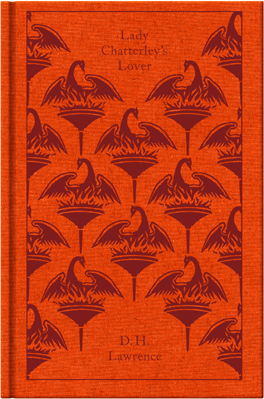
C_Club #2 - "Lady Chatterley's Lover" by David Herbert Lawrence


First and foremost - this book is beautifully written. Regardless of my not-so-memorable first encounter with Lawrence through "Sons and Lovers", I have to admit that he is a highly elegant writer.
 
Now, when it comes to the rest, I have to agree with my fellow Classics Clubber Christine, who pointed out that that this novel is controversial. I thought for a long time after finishing "Lady Chatterley's Lover" - how would I describe it, in short. And controversial is a good word. Controversial because of the themes it examines, and controversial because of the difference in times and trends - back when it was written and how the world looked like then, and the very liberal world of today.
 
 
It is actually quite difficult for me to get a grasp my thoughts here - it was the book that I didn't love, yet filled with stick-ins just because it was so beautiful. Not to say that I hated it; it's just that oftentimes I was really doubting how Lady C has survived the test of time. Let's put it that way: as a classics reader in 2013, I can fully appreciate and imagine the meaning and impact that such a book likely had back in 1928; however, as with all the classics, I will never, ever be able to experience the kind of feelings that people of the time had towards this novel. In that sense - some classics novels are more, hm, time-resistant and universal than others, and I think that Lady C falls into the latter category.
How exciting!
Photo lent from here.

My Penguin clothbound copy came with a long introduction written by wonderful Doris Lessing (really, a piece of art of its own, this introduction) and although I am always on the fence whether to read intros or explanations on books beforehand, I am glad I did it in this case. It didn't spoil anything and I was able to understand the novel a bit better.
 
Constance married Clifford Chatterley in 1917, during the war. When Clifford returns from the war six months later, his whole lower body is paralyzed. From the very first page of the book, reader can fully see what kind of problems there are to come.
 
Lawrence, who was extremely worried about the future and the fate of England, stated that the country can be saved through "tender-hearted fucking", as Lessing puts it. Taking that into consideration and then considering the fact that Clifford Chatterley was no longer capable of any kind of physical love related action, one can see how the marriage is doomed from the beginning. Clifford and Constance are otherwise also very estranged from each other, and this kind of life is not good for the woman (she gets very thin and, basically, starts withering), so she starts looking for tenderness and love from other men.
 
"But what do you believe in?" she insisted. [...]
[...]"Yes, I do believe in something. I believe in being warm-hearted. I believe especially in being warm-hearted in love, in fucking with a warm heart. I believe if men could fuck with warm hearts, and the women take it warm-heartedly, everything would come all right. It's all this cold-hearted fucking that is death and idiocy." /p. 206/
 
In these few lines stands, basically, everything that Lawrence wanted to say, I think. He touches several subjects of concern - people becoming cold and individual and thus becoming estranged from each other; the gap between those who bow to "bitch-goddess" - success and money (the term lent from Henry James, I believe) and those, simpler people, who actually, physically carry out everything that needs to be done - the workers.
 
I feel like my thoughts are all over the place when it comes to this book. Oftentimes I also found myself pondering how exactly people might have read "Lady Chatterley's Lover" back in 1928. And I must admit, I kind of had this image in my mind much similar to this black-and-white photo up there: I imagined women giggling, underlining "the juicy bits" and I imagined how, most of times, this book was acquired mayhaps only because of its shock value. Well. It definitely has no shock value in our modern world, so it is possible for us, at least, try and peek behind the curtain of "shock" and dig deeper into the meaning of this text.
 
My clothbound copy ends with a long "A Propos of Lady Chatterley's Lover" written by Lawrence himself. This, too, was a delightful piece of read. Lawrence dissects the story a bit, and talks about the reception and difficulties he had when publishing it (mainly connected to many of pirate copies that were made). I guess it goes without mentioning that Lady C became a famous banned book. I also chuckled a lot when he very directly attacks G. B. Shaw, with whom he seemed to have very different opinions on sexuality. "The Chief Priest of Europe knows more about sex than Mr Shaw does, anyhow, because he knows more about the essential nature of the human being," he says on page 318.
 
All in all. This was a novel that I neither particularly liked, nor disliked, but I very much enjoyed how it was written. The beauty and elegance of the words! I don't think it was a waste of time; any book that triggers the flood of thoughts is good, whether in negative or positive sense. However, I do warn that there is no point searching for joyfulness and sunshine from Lady C. I don't think I found a single likeable character. I could understand their actions and behaviour - sure, but I didn't like them, nor relate to them, nor particularly symphatise with them. As it was put in a review on the book I read some time ago (unfortunately I do not remember who and where wrote it), the whole book felt like a rainy day. Well, I happen to love rainy days. But I know many of us don't.
 
How my book looked like afterwards. Springy! :)

---

335 pages
 

Wednesday, February 13, 2013

C_Club #1 - "Jane Eyre" by Charlotte Brontë

I think my first read of "Jane Eyre" took place some time in early or middle of the teens. It was an Estonian-language hardcover copy (an ugly blue plain cover that gives you no idea of what the book might be about) that I snatched from my grandmother's bookshelf (my grandmother has a huuuuuuuuuuge library, but that is a topic that deserves a post of it's own). I definitely read it in summer, because books that I took from those shelves I read while spending vacation at grandmother's. I liked the story, but it didn't cause any life-changing or wow-effect.
 
I think my mum saw me read, and said something along the lines "This is a very good book". I think that is one of the only few book-related conversations me and my mother have had. She didn't used to read that much, and now that she does, our preferences in literature don't have much common ground.
 
Thus, having finished this book now, at the age of 30, I actually went to Goodreads and changed my rating to five stars. Because this book deserves it.
 
And what an interesting thing. Back in my teens, reading "Jane", I only remember the story. And some fragments of characters, because, well, they are kind of strongly painted. Reading this time, the plot was way in the background and the focus was just drawn to the characters and especially the language/dialogues. That just makes you think... all those books I read when I was younger, maybe one should pay another visit.
 
Back to the book. I have to confess that I have always been a bit puzzled when (female) readers, let's say, swoon over (male) characters and romances in novels. Secretly I wish I could do that too, but I can't, and I have accepted the fact that there is probably something wrong with me in that sense :p Maybe it means I don't relate enough, maybe it means romances aren't just that big of a deal for me. I do have a lovely boyfriend myself and I need to be taken care of, in real life, but I never look for it in books. (Maybe if it was a yummi very tragic and not-happy ending story...) So, given that, many have taken fancy of the romance in this particular novel and the male lead character. It does trigger my interest that both Jane E and Edward R are described to be plain and not that comely in their looks. I think that is refreshing to read nowadays (especially when put next to all these TV-things that 99% feature "beautiful people"; yes, let's not get into the concept/definition of beauty here). I can relate to Jane when she thinks
 
And was Mr Rochester now ugly in my eyes? No, reader: gratitude, and many associations, all pleasurable and genial, made his face the object I best liked to see; his presence in the room was more cheering than the brightest fire. /p. 128/
 
Yes, many associations are those that combine beauty, for me.
 
It's very difficult not to love Jane's character. She is an excellent role model, without being preachy or coming off fake. Just take a look at that little scene with Jane and Edward in the clothing store:
 
With anxiety I watched his eye rove over the gay stores: he fixed on a rich silk of the most brilliant amethyst dye, and superb pink satin. I told him in a new series of whispers, that he might as well buy me a gold gown and a silver bonnet at once: I should certainly never venture to wear his choice. /p. 236/
 
Bang! My kind of girl :)
 
However. May Edward R be what he is (with all the sneakiness and madwoman-affair), I actually started appreciating him a whole lot more after meeting the character called St John. Oh boy... He just made my hormones go all the wrong ways.
 
"[...] I shall be absent a fortnight - take that space of time to consider my offer: and do not forget that if you reject it, it is not me you deny, but God.[...]" /p. 362/
 
he writes in a note to Jane after having proposed. And what follows is
 
He did not leave for Cambridge the next day, as he had said he would. He deferred his departure a whole week, and during that time he made me feel what severe punishment a good yet stern, a conscientious yet implacable man can inflict on one who has offended him. Without one overt act of hostility, one upbraiding word he contrived to impress me momently with the conviction that I was put beyond the pale of his favour. /p. 363/
 
PASSIVE-AGGRESSIVE MUCH? Yeah, I have issues with passive-aggressive people, even if they appear only in a book... Not to mention I can't really quite fathom such behaviour from any person claiming to be pious... So yes, story around St John did creep me out good while.
 
All in all, it was a cozy read. I think it'd make a pretty good comfort book. Language is at times lush and also sharp as a surgeon's knife, and the story itself doesn't drag nor hurry overly. If I should one day have a little girl of my own, I'd definitely stick this one in her hands first, over "Hunger Games" and whatnot other popular modern day books :)
 
---
 
401 pages